
It’s been a while since I last posted, and I promise I am still working on several paintings… but I’ve gotten slightly distracted lately. A few weeks ago, there was an estate sale about an hour from us from someone who was clearly deeply involved in letterpress printing. I’m talking a fully functioning basement print shop with at least a dozen printing presses of different designs and different sizes, a room full of type cases, ink cabinets, etc… It was incredible and a bit sad at the same time, as I’m sure the auction company did not fully appreciate what they had or how to re-home some of that very valuable equipment.
All the same, I was able to come home with one of the very modestly sized table-top printing presses. A Kelsey Excelsior 5″ x 8″ model N, forged in Meriden Conn. some time between 1935 and 1955 from what I can tell. Oddly enough – it seems these were actually marketed as children’s toy presses for kids to get into printing, but they are fully functional self-inking printing presses. It had no rollers that I could find, so I found an eBay store that specializes in newly made rollers for all types of makes and model of press.
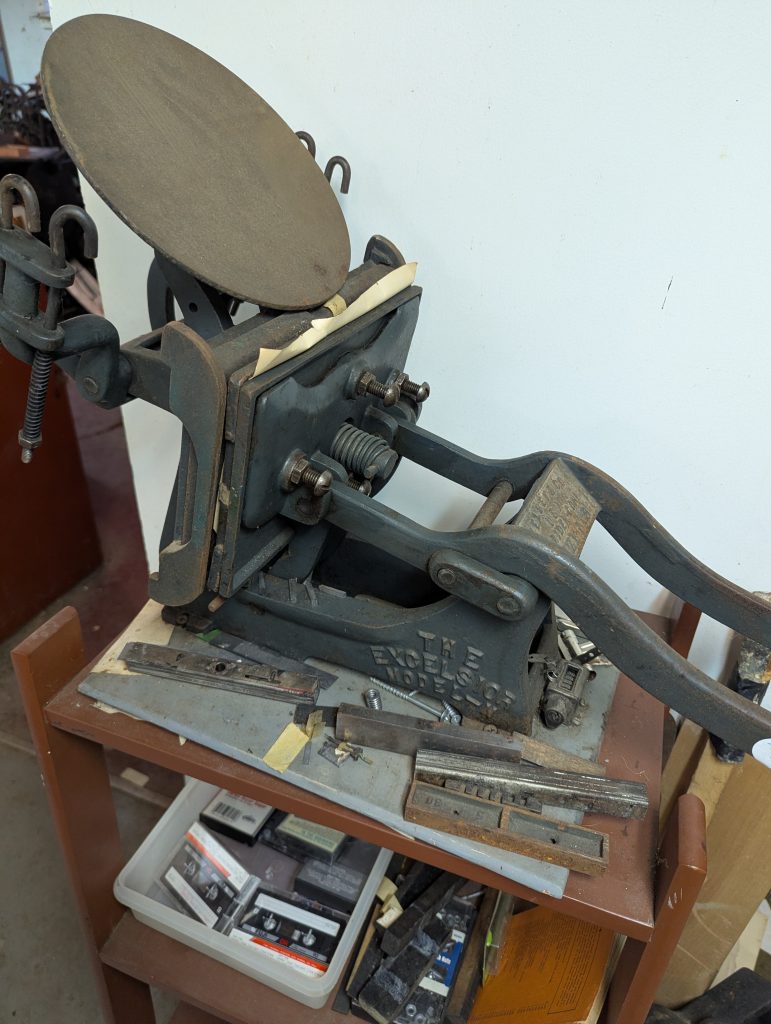
Here it is at the sale…
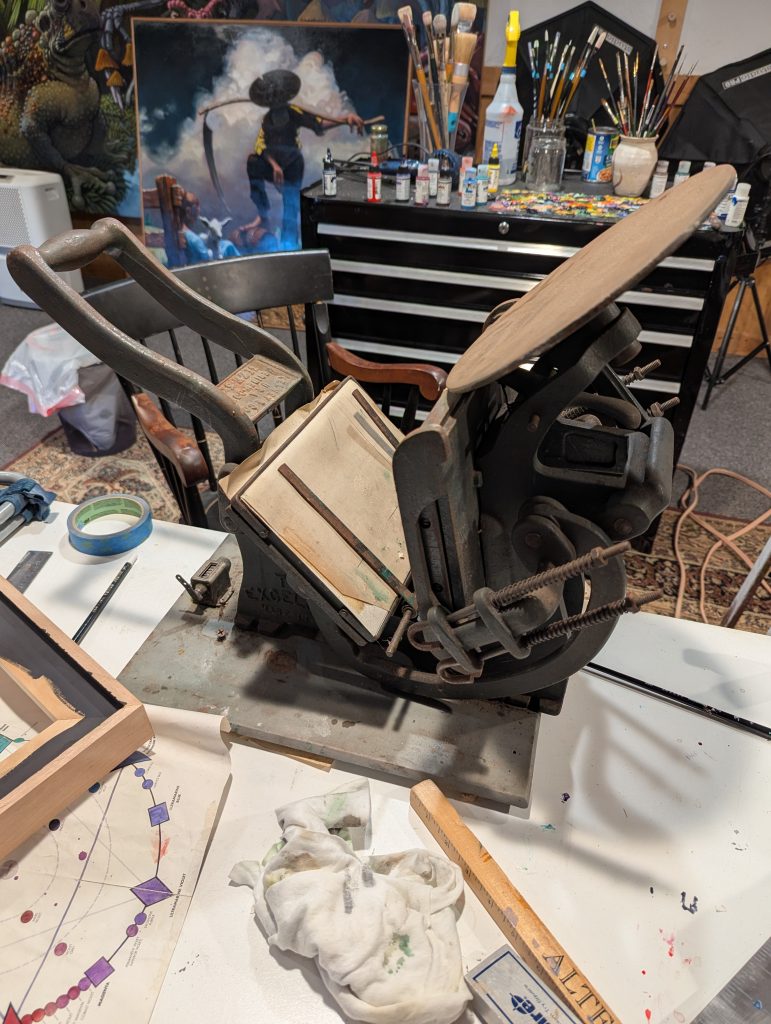
And here it is in my studio ready for a tear-down and clean.
Naturally, I jumped straight into carving a new linoleum block so I could test it out. My goal is to use the press to make greeting cards. The press is designed for movable type, so using linoleum requires mounting the block on a backing (in this case, ¾” plywood) to bring it up to type height. Linoleum also presents much more surface area than individual pieces of type, which can make it challenging to get good impressions on a smaller press — but we’ll see!
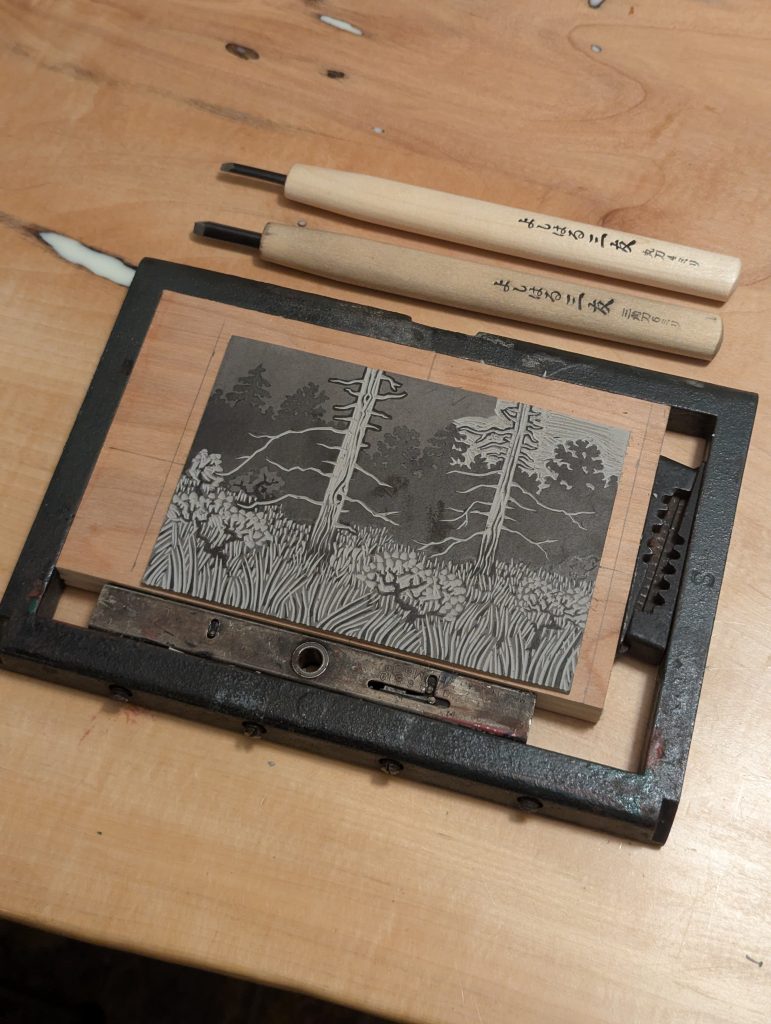
Here is the Lino carving in process. I glued the Lino to plywood to get it up to type height and then used these metal “quoins” (new printmaking word for me) to secure the plywood into the “chase” (another new word) which then gets secured into the press…
A fun side story: after we got home from the sale, I started reading up on how all of this works and realized I would need quoins — which I did not have. Given the scale of printing that had clearly been done in that house, I was sure they must still be there somewhere. My wonderful wife graciously agreed that we all (Colin included) make a second trip back to the sale the very next morning to rummage through the basement again. Sure enough, we found the quoins we needed — along with the quoin key, the special tool used to tighten everything into place. All of it acquired for the price of a return trip and an extra $5.
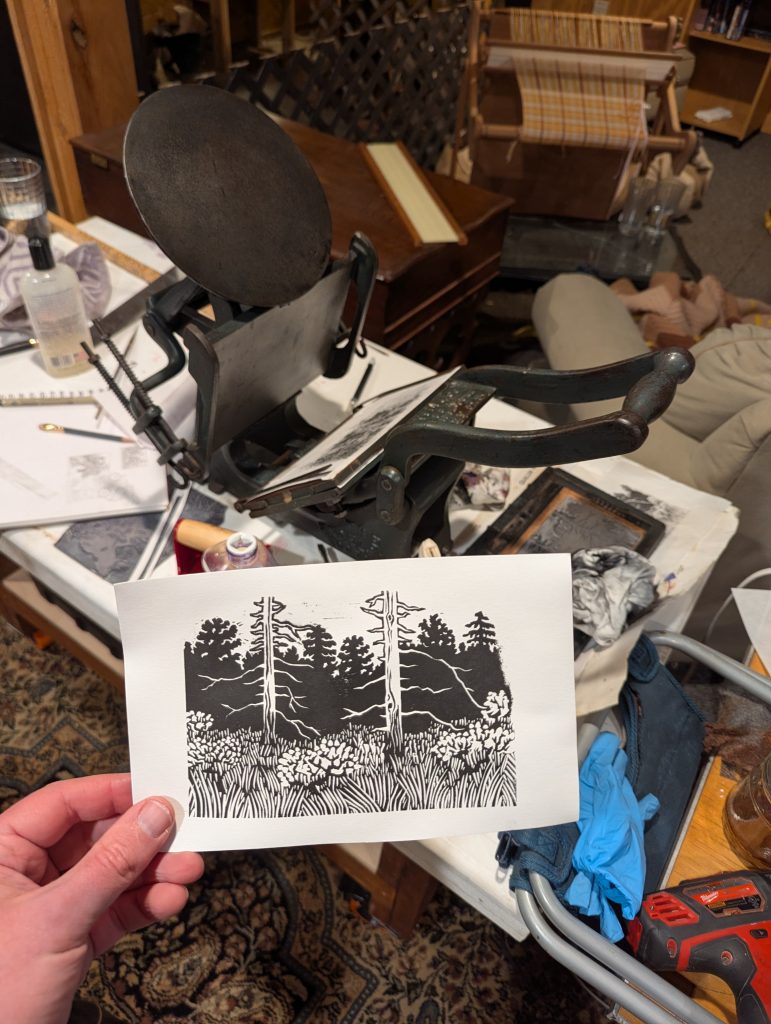
Anyhow, carving complete, it was printing time!
Overall I’m pleased with how my first attempts on this machine went. At first the prints were very faint, and so I kept adding “packing” to bring the paper in firmer and firmer contact with the Lino. I also added more ink to the press – I imagine it will take some time to figure out how to correctly load the press with ink. I trialed two different papers and found that the thinner paper I’ve had work better for hand printing in the past didn’t seem to perform as well as thicker paper on this press. Mostly I was just surprised how fast it was – producing over a dozen prints in no time at all.
Plenty more to learn.
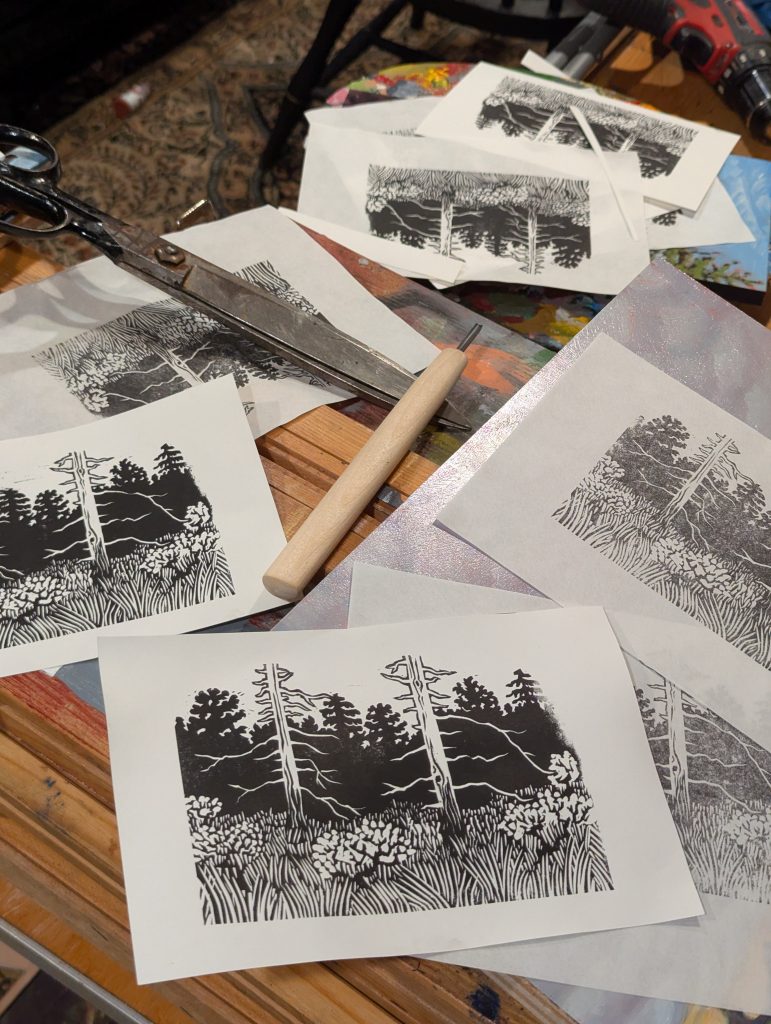
So there you have it. I’m hoping to produce a proper run of cards soon. Thanks for reading and be well. ~Peter